
A Historic Step Without a Step
How Deutsche Bahn and Talgo designed a high-speed train that finally meets people where they are

You can listen to the newsletter here:
When I look back 30 years, there are certainly some milestones in the UK, Germany and Austria where I would say that was the turning point in disability rights. In December 2025, Deutsche Bahn will roll out a new era of German high-speed travel with the launch of the ICE L - a train that promises not only comfort and style, but something far more profound: accessibility. I would expect that this train could become such a turning point as well.
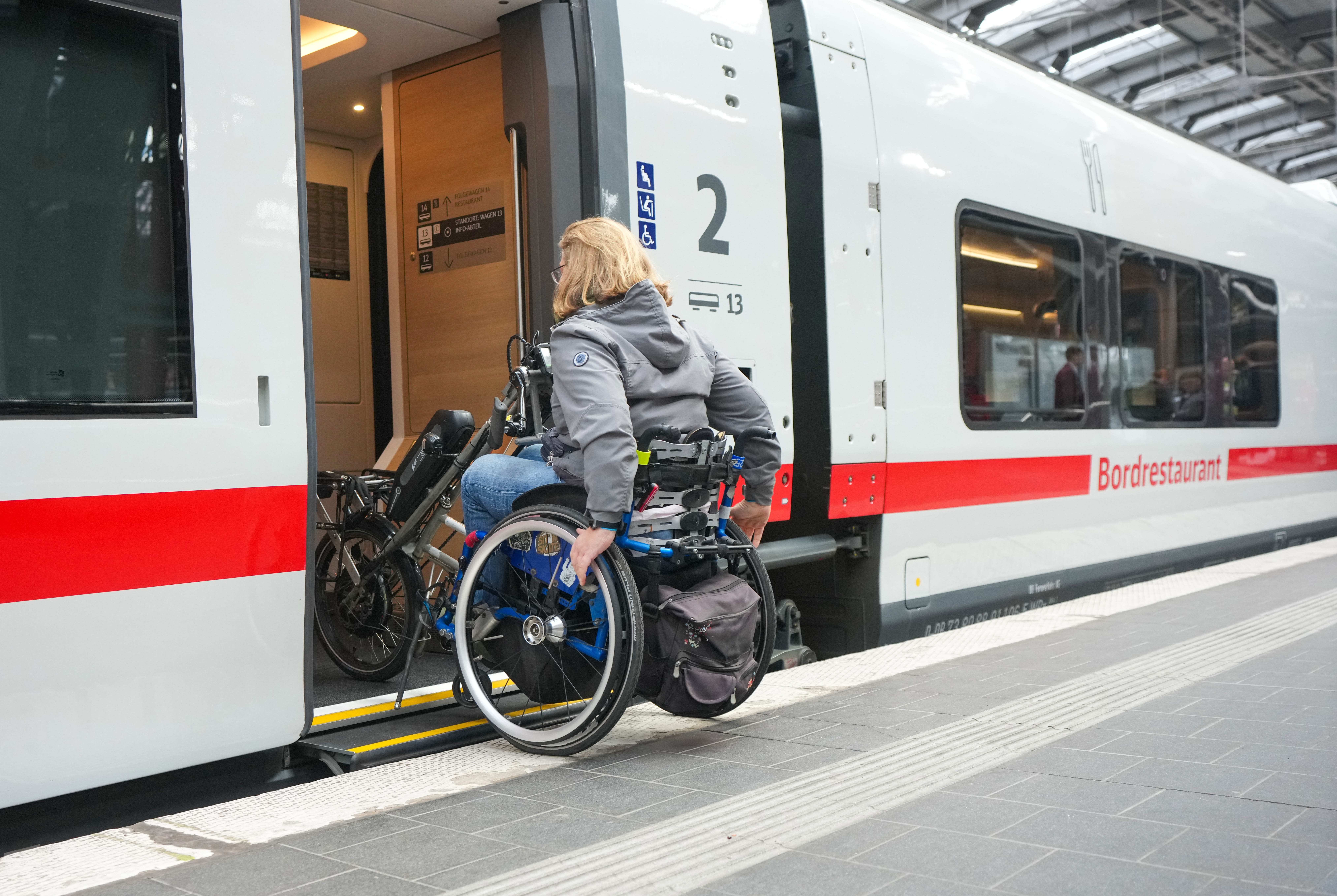
For the first time, passengers can roll, walk, or wheel straight from the platform into a high-speed Intercity Express without steps, ramps, or awkward hydraulic lifts. In a country where 76 cm platforms are the norm, this is a milestone decades in the making.
A new kind of ICE
Built by Spanish manufacturer Talgo, the “L” stands for “low floor” or “level boarding” for railway enthusiasts. The entire train sits level with standard German and Dutch platforms, creating a truly seamless boarding experience. Its continuous low-floor design runs the full length of the carriage, meaning no interior steps either - just an even surface from vestibule to bistro car. This makes boarding faster for every passenger: wheelchair users, parents with prams, holidaymakers with bikes, and anyone hauling luggage through Berlin Hauptbahnhof on a tight connection.


But the innovations don’t stop at the doors. The ICE L features signal‑friendly windows (finally solving the dead‑zone problem), adaptive lighting that adjusts with the time of day, and thouroughly tested ergonomic seating. No irononing board issue between Cologne and Berlin. Deutsche Bahn even enlisted over 1,600 volunteers to trial seating comfort and interior usability before final sign‑off.
Though capped at 230 km/h - slower than other ICE generations - the ICE L focuses on comfort, sustainability, and accessibility rather than raw speed. Each set includes three wheelchair spaces, height‑adjustable tables, family areas, and a bistro car. It’s not a race car; it’s a rolling living room. Also the table on the wheelchair space is quite clever. It’s liftable and isn’t in the way when manouvering into the space. Show me your wheelchair space and I show you how overdue new rolling stock is.
What it means for disabled travellers
For disabled passengers, the ICE L could remove one of the biggest barriers to independent long‑distance rail travel in Germany. Until now, wheelchair users had to request assistance, rely on lifts or bridge ramps, and hope platform staff were available. With this train, independence finally becomes the default even on long-distance trains. “We want to inspire people with our trains. With the new ICE L, we are clearly focusing on more comfort and reliability for our passengers. Every new train contributes to stable operations. That’s why we have consistently modernised our fleet in recent years and acquired many new high-speed trains,” said Deutsche Bahn CEO, Evelyn Palla.
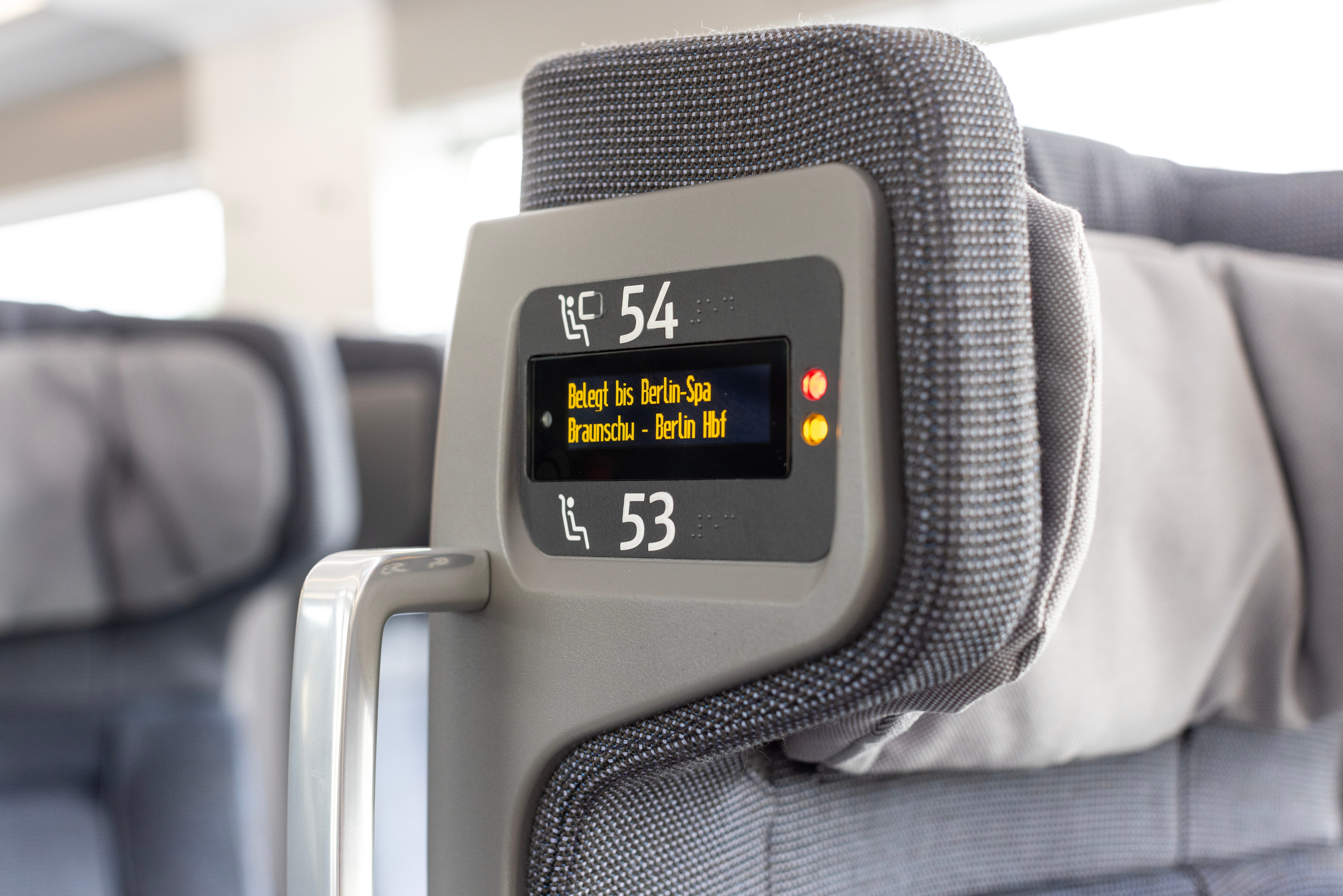
The German environmental transport association VCD called it “a genuine step toward accessibility” - “With the ICE L, Deutsche Bahn is taking a step in the right direction. At long-distance platforms, which in Germany are typically 76 cm high, passengers can board at ground level, even with rollators or wheelchairs. The train uses tactile guidance systems and Braille. The train will have three spaces for wheelchairs. The VCD demands four, but this is still progress.
The VCD said, Deutsche Bahn intends to deploy the train primarily at platforms with 76 cm height. “This shows that the path to complete accessibility on the railway is not yet finished. The VCD will advocate for further steps to follow.” Still, with Berlin–Cologne services starting 14th December and extensions planned to Sylt, Amsterdam, Copenhagen, and Vienna by 2026, the blueprint is clear: accessibility at scale.
Lessons for the UK
Across the Channel, the ICE L raises uncomfortable but important questions. Britain’s railways remain a patchwork of legacy platform heights, manual ramps, and “assisted travel” systems that still require advance notice in many circumstances. The German approach suggests a pivot: design the train to meet the infrastructure, not the other way around which will never happen in our lifetime.
Talgo’s use of shorter, articulated coaches and single‑axle bogies keeps weight low enough for a continuous low‑floor design - a concept that UK rolling stock manufacturers could adapt for future fleets. Greater Anglia, Merseysiderail and Transport for Wales are already leading the way with Stadler. And I cringe every single time some railway dinosaur is celebrating “new” rolling stock already not fit for purpose anymore because of steps.
Everyone speaks about value for money for the taxpayer, but suddenly that’s not the focus anymore when it comes to accessibility of rolling stock. Then we still do the same old, same old, if Stadler doesn’t come to the rescue accidentially. So I’m waiting for the new Southeastern rolling stock at my doorstep. It better provides level boarding and they better start ordering. It doesn’t get cheaper anyway.
There was not much I could praise Deutsche Bahn for in the past 40 years, I avoid them because their assistance is often abysmal and non-existent. So, the story of the ICE L isn’t just about engineering; it’s about inclusion, technology, and quiet transformation. It’s the result of acknowledging that accessibility is not a bolt‑on feature which you can fix later, but a design philosophy. As the first passengers glide smoothly from platform into their seats this December, Germany will have taken a small but historic step - by eliminating one altogether.
Some interesting links
The US Transportation Department will not enforce a rule issued in December by former President Joe Biden’s administration that requires new consumer protections for disabled passengers using wheelchairs. That’s really bad news for everyone who travels to or in the US and has a wheelchair or any other mobility aid. The rule would have also required airlines to reimburse passengers for damage to their wheelchairs.
The Severn Valley Railway (SVR), a heritage railway between Shropshire and Worcestershire, England, approximately 18 miles south-west of Birmingham, has launched a historic coach that can welcome wheelchair users. The trust hopes this accessible buffet car and saloon will be an inspiration to other coach restorers across the heritage sector.
My hairdresser is next to an Overground station. I know these made-up rules on the Overground just too well. There is always something wrong in the Matrix when wheelchair users want to board, and we are going backwards if that’s not stopped and immediately prevented from happening. The Overground has more than enough space to welcome everyone.
Something to watch
So far, lifts were a pretty accessible endeavour for quite a wide group of people, including deaf-blind people, if the lift had Braille and tactile buttons. Still, the world can over-engineer everything, and that’s a problem because it leads to exclusion.
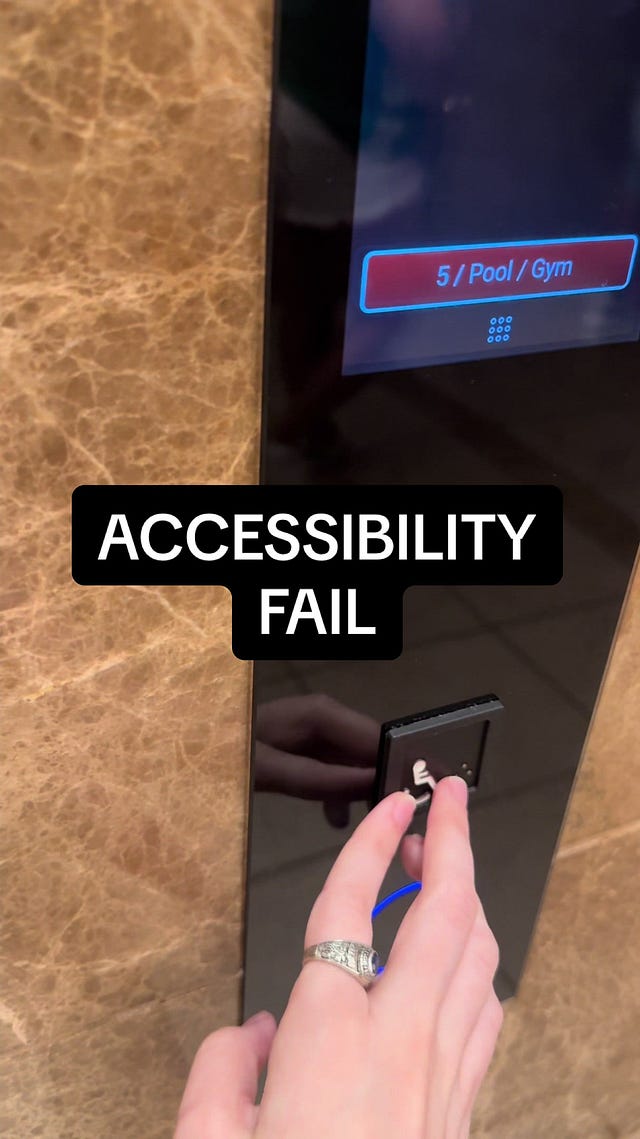
 Tiktok failed to load.
Enable 3rd party cookies or use another browser
If you have issues watching this because you have no TikTok account, watch here.
Some final words
The Accessible Link is a reader-supported publication.
Who is writing this newsletter?
I’m Christiane Link, and I improve the customer experience in aviation, transport, and travel. I worked as a journalist for over two decades and travelled extensively for business and leisure. I’m a wheelchair user.
Work with me
Whether you're a Customer Service Director, a Head of Customer Experience, a corporate Accessibility Manager, a DEI leader, a transport planner, or a member of a disabled employee resource group, I can help you make your organisation more inclusive. You can book me for speaking engagements or hire me as a consultant for your accessibility or DEI strategy, communications advice and other related matters. I have worked for airlines, airports, train operators, public transport providers, and companies in other sectors.
If you want to read more from me, follow me on LinkedIn, Twitter, Bluesky or Mastodon. You can also reply to this email if you want to contact me.
.