
Access is Love
Design and Disability at the Victoria & Albert Museum

You can listen to the newsletter here (and I tried something new this week):
If you haven’t yet made time in your schedule for a trip to the Victoria & Albert Museum in London, the Design and Disability exhibition is an essential pilgrimage for anyone responsible for or interested in accessibility. This is not an exhibition about objects alone; it's a vibrant, activist tapestry of lived experiences, creative ideas, and a challenge to all to reimagine the approach to accessibility. It runs until 15 February 2026.
Visibility, Tools, and Living
With over 170 objects spanning fashion, technology, urban design, architecture, and protest art, the exhibition is split into three sections: Visibility, Tools, and Living. Each illuminates how Disabled, Deaf, and neurodivergent people have not just adapted to barriers, but have remade the world around them. My favourite object was a t-shirt with the slogan “Access is Love”.
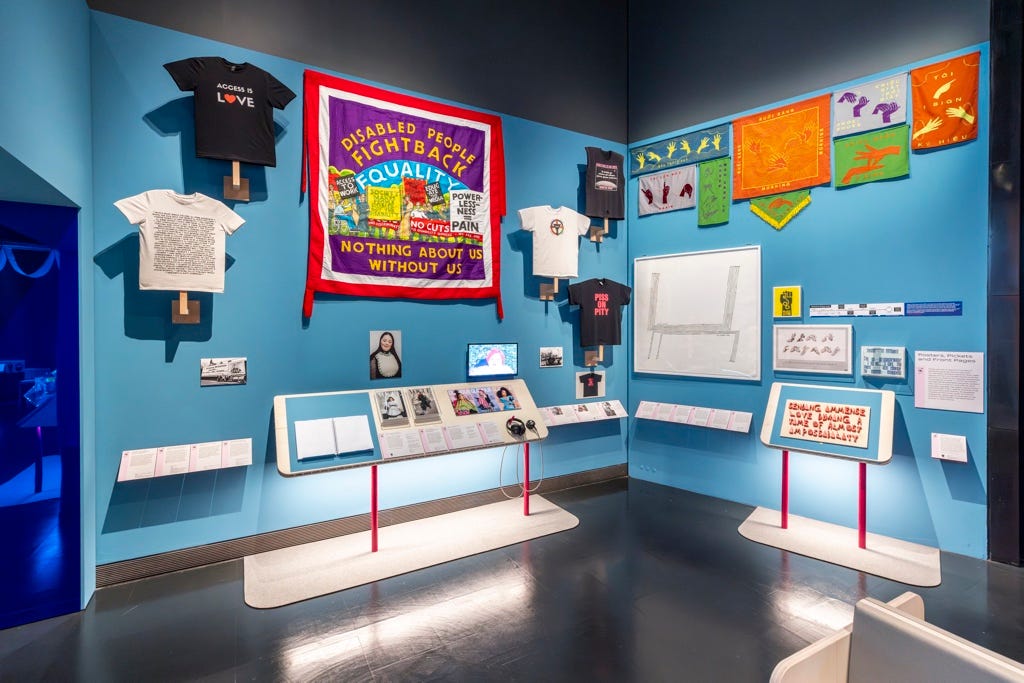
What the show does best is treat disability not as an afterthought or minor category of design, but as a driving force for innovation. Disabled designers are presented as the experts in their own lives and as the rightful drivers of change.
Bold and unapologetic
Objects are bold and unapologetic - from protest posters and fashion that radically reclaims identity to visual media showing Disabled people as creators, not just subjects. The message is clear: Inclusive design starts by centring Disabled voices.
Adaptive Xbox controllers sit beside hacked wheelchairs, showing how mainstream products can be transformed when Disabled expertise is embedded from the beginning.
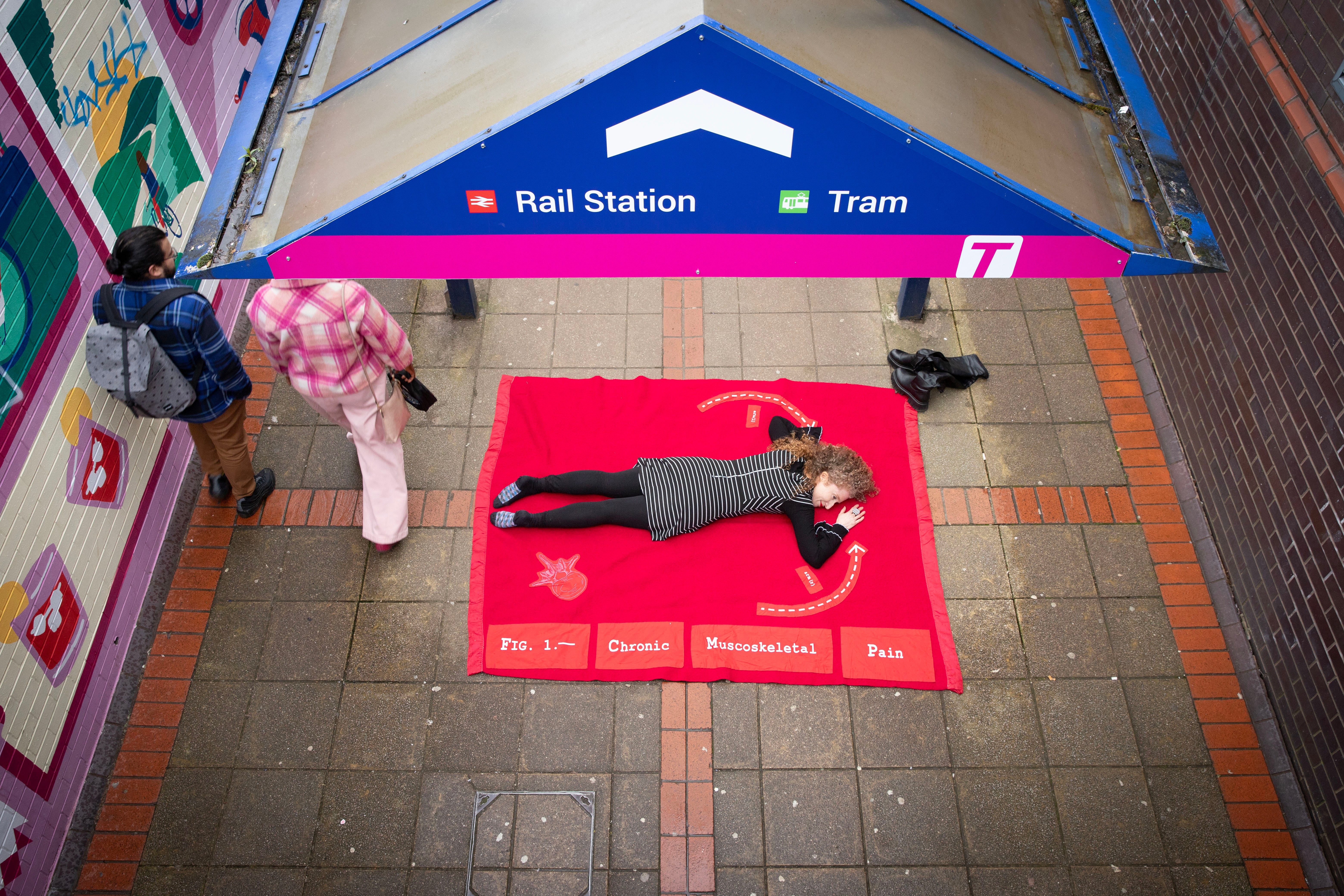
The political power of design comes alive: objects and campaigns here highlight not just what Disabled people have built, but how they’ve fought for recognition, rights, and inclusive futures. Whether through grassroots activism for accessible infrastructure or creative protests against exclusion, the exhibition shows that the accessibility we have today didn’t happen by chance but through activism by Disabled people.
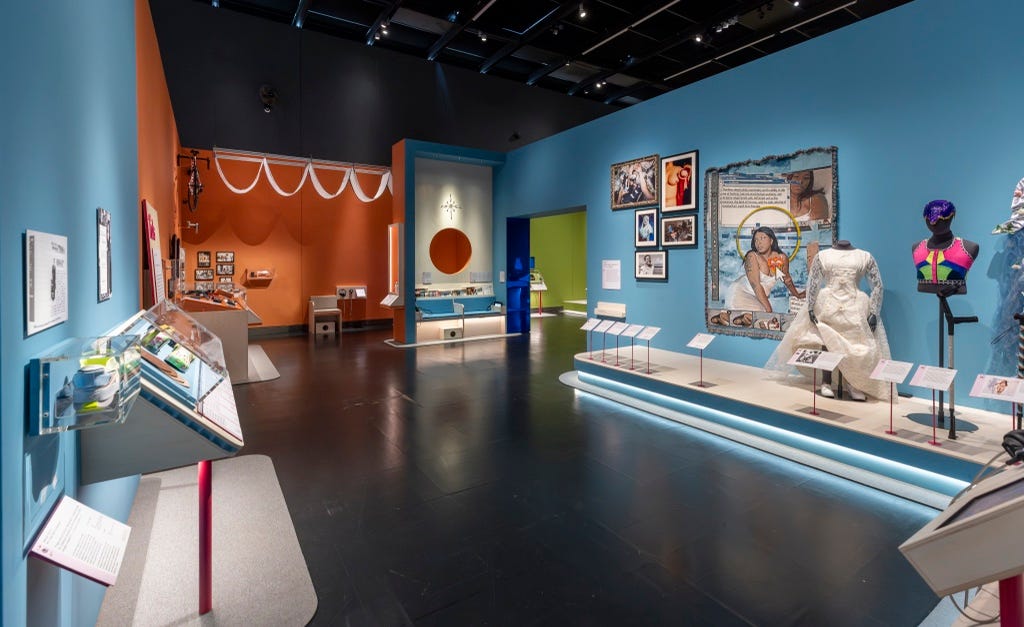
The V&A’s approach to inclusivity of the exhibition itself was impressive too: tactile surfaces, sensory maps, BSL guides, rest stops, and seating throughout the exhibition.
The exhibition “Design and Disability” is both a celebration of decades of Disabled activism and a blueprint for genuinely inclusive futures. As the world faces policy setbacks and austerity, this exhibition shows that progress in access is always hard-won. I got a strong reminder of that when I wanted to travel home from the exhibition. Due to the inaccessibility of South Kensington station and the simultaneous breakdown or maintenance of lifts at Green Park, Victoria, St Pancras Thameslink platform, and London Bridge Southeastern platform, I had no choice but to take a taxi to get home.
Some interesting links
The tourist hotspot, South Kensington tube station in London, could become accessible. Maybe.
In 1853, Elisha Otis sold his first lift following his invention of the elevator safety brake. In 1900, the Grand Palais in Paris was built and it was just upgraded from 2 to 49 lifts. A good reminder of what’s possible, even in historic buildings.
A landmark rule to expand the rights of disabled air travellers in the US has been hamstrung by a lawsuit from major airlines and delayed enforcement by the Transportation Department.
Something to read
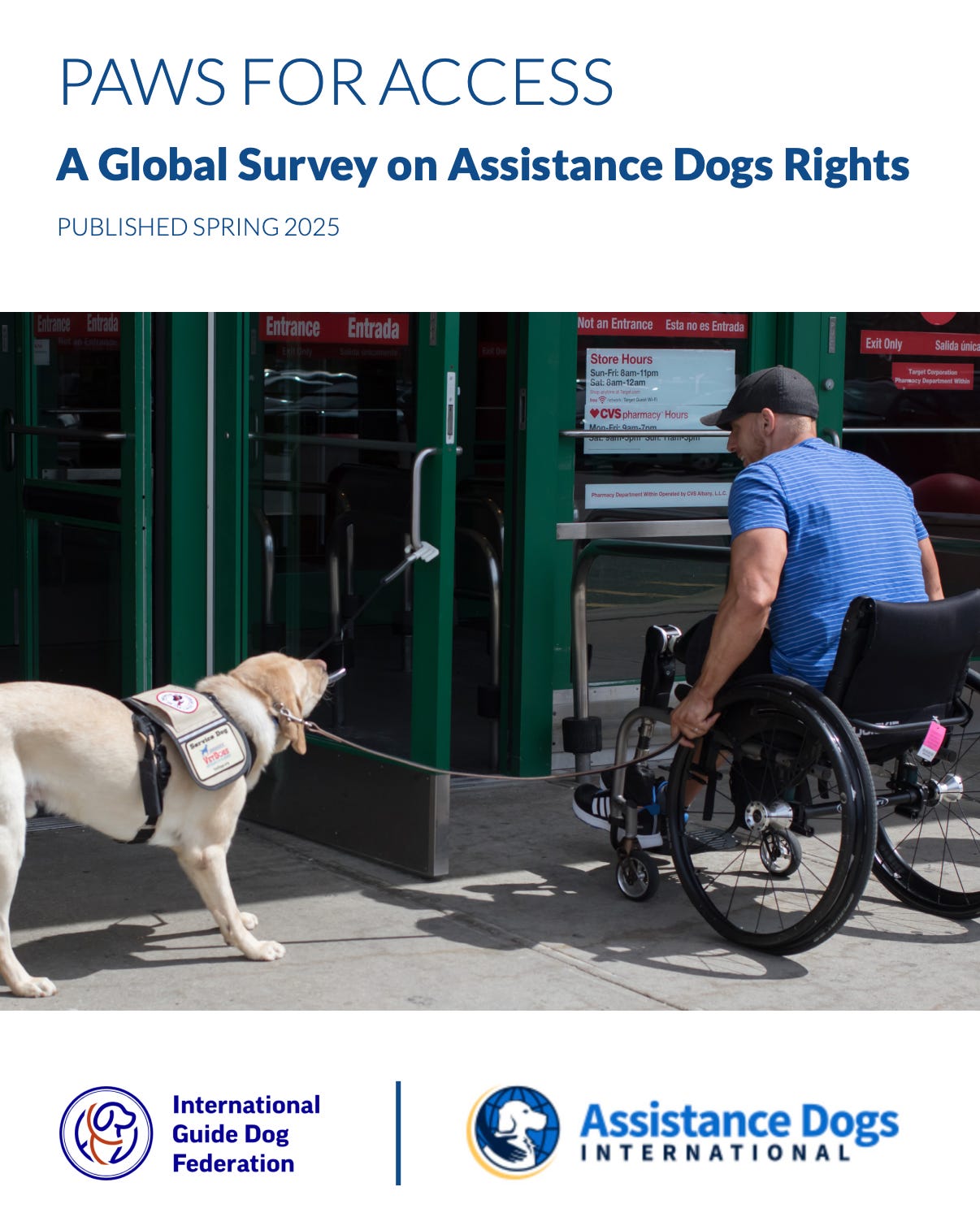
The international Paws For Access Report on Assistance Dog Rights has exposed the widespread exclusion and humiliation faced by guide and assistance dog owners across the globe.
Some final words
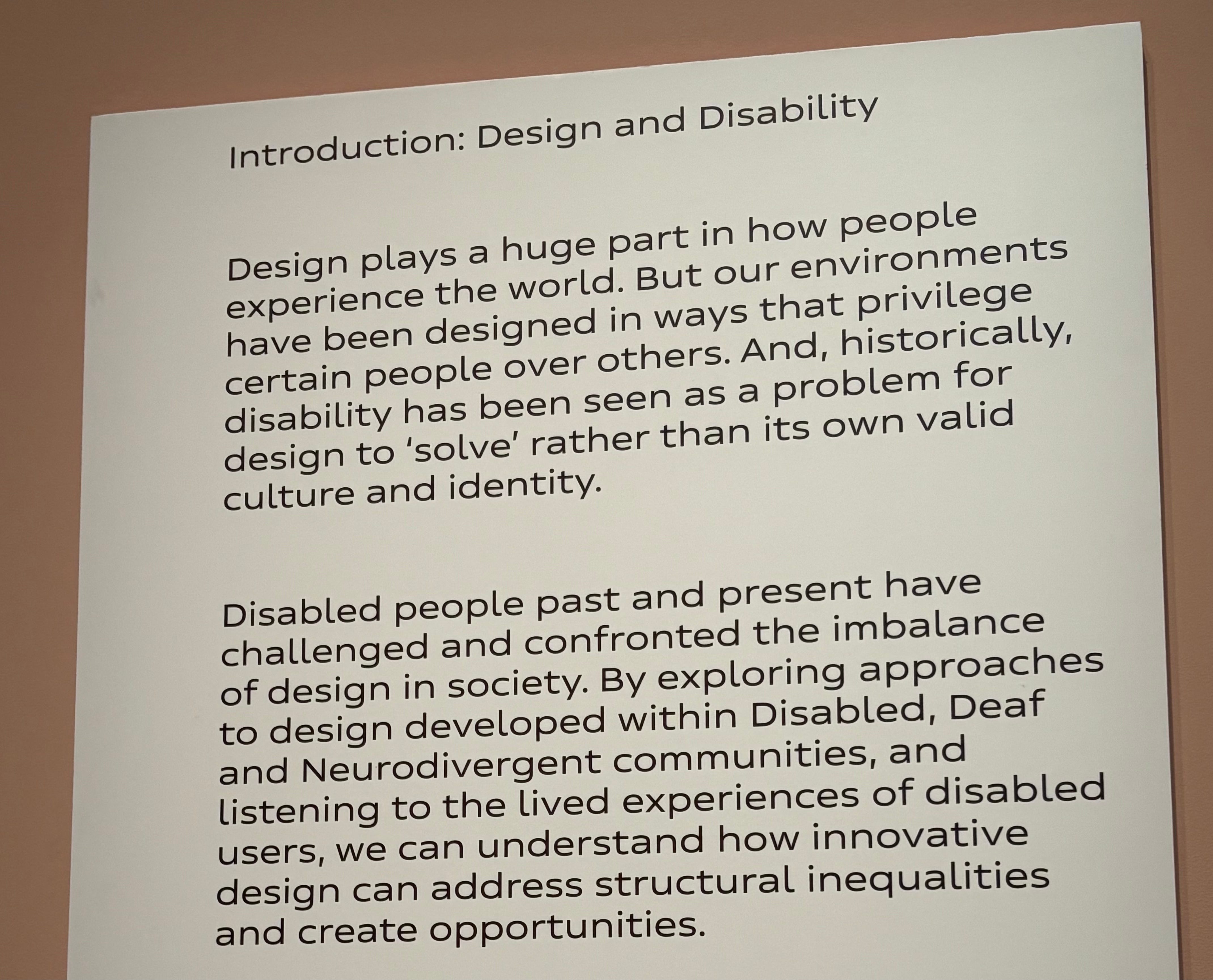
[Introduction of the exhibition “Design and Disability” at the Victoria & Albert Museum: Design plays a huge part in how people experience the world. But our environments have been designed in ways that privilege certain people over others. And, historically, disability has been seen as a problem for design to 'solve' rather than its own valid culture and identity.
Disabled people past and present have challenged and confronted the imbalance of design in society. By exploring approaches to design developed within Disabled, Deaf and Neurodivergent communities, and listening to the lived experiences of disabled users, we can understand how innovative design can address structural inequalities and create opportunities.]
The Accessible Link is a reader-supported publication.
Who is writing this newsletter?
I’m Christiane Link, and I improve the customer experience in aviation, transport, and travel. I worked as a journalist for over two decades and travelled extensively for business and leisure. I’m a wheelchair user.
Work with me
Whether you're a Customer Service Director, a Head of Customer Experience, a corporate Accessibility Manager, a DEI leader, a transport planner, or a member of a disabled employee resource group, I can help you make your organisation more inclusive. You can book me for speaking engagements or hire me as a consultant for your accessibility or DEI strategy, communications advice and other related matters. I have worked for airlines, airports, train operators, public transport providers, and companies in other sectors.
If you want to read more from me, follow me on LinkedIn, Twitter, Bluesky or Mastodon. You can also reply to this email if you want to contact me.
.