

Hello everyone,
"Oh cool, another rainbow train" was my first thought when I saw the new Elizabeth Line Pride train — until I saw the awful illustration of a wheelchair user next to the door at the top of the train. Some of my biggest pet peeves are stereotypical illustrations and fake photos of wheelchair users and other disabled people. Every day, I see them on LinkedIn, on news websites, and in marketing campaigns. I really don't want to see one on a train.
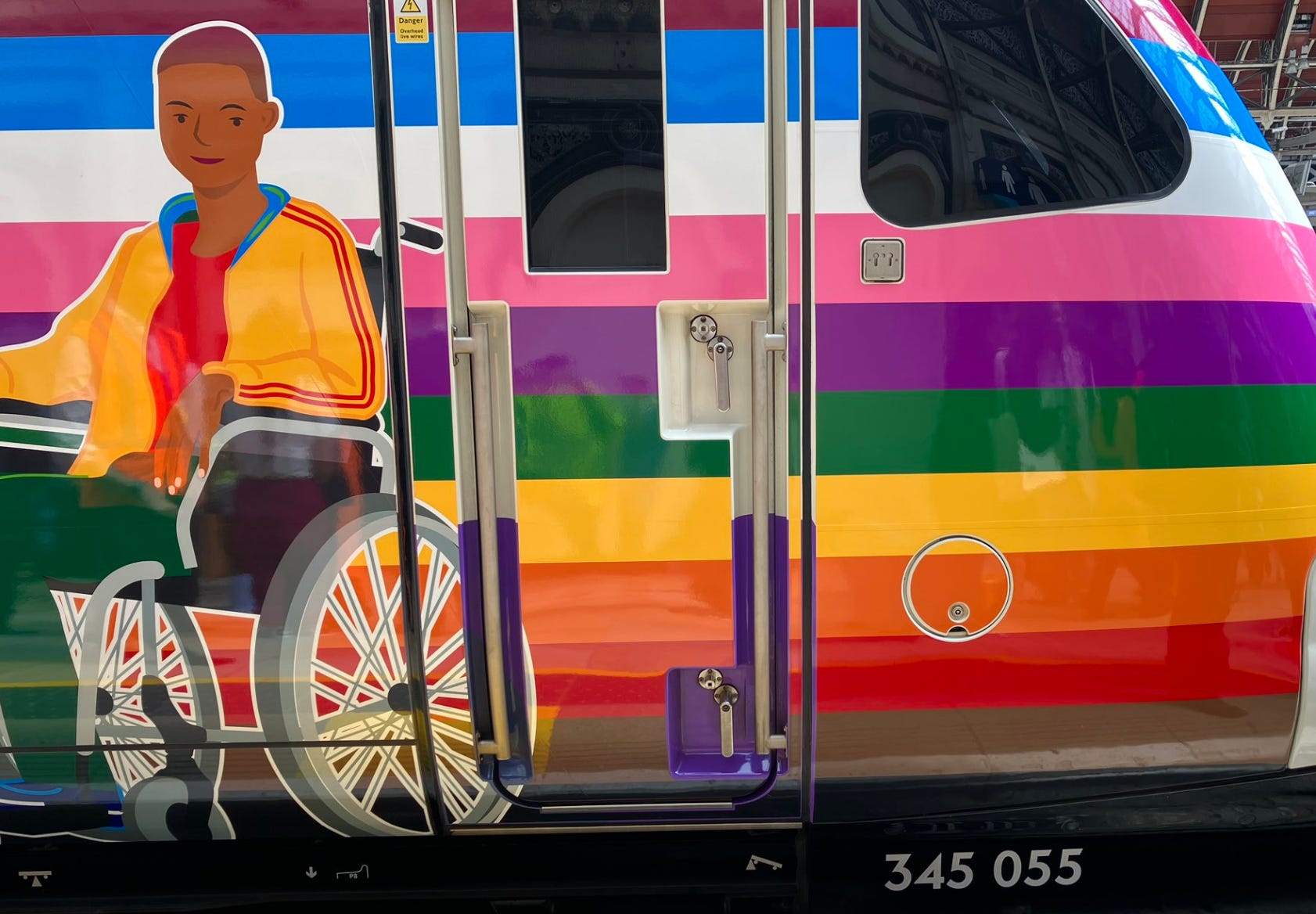
The wheelchair user on the Elizabeth Line train doesn't look authentic to me. It looks like a very old hospital wheelchair, and the teenager in it makes the contrast even worse. He looks sporty, but the wheelchair doesn't fit him. It is too big and heavy; it would be very difficult to manoeuvre in such a wheelchair through London using public transport.
These unrealistic images of disability can perpetuate harmful stereotypes and reinforce negative attitudes towards disabled people, contributing to further exclusion and marginalisation. It's the opposite of what Pride stands for. In contrast, authentic illustrations and photos of disabled people can challenge these stereotypes and promote a positive image of disability. I personally feel more excluded when I see a fake photo of a disabled person than when I don't see a disabled person at all.
Is it really that difficult to use authentic images of wheelchair users?
No, it isn't. I know most non-disabled people can't see it, but many wheelchair users see when photos are fake. Especially in transport, these photos are everywhere. Not many marketing teams seem to make an effort to find out which wheelchairs we really use and to hire disabled models.
Badly fitting wheelchairs are harmful. They cause pressure sores or worse. That's nothing any equality campaign should ever normalise. Also, if a marketing campaign uses non-disabled models for disabled roles, the whole campaign becomes disingenuous and even unfair. Non-disabled fake models push disabled models out of business.
The use of stock photos of fake disabled people contributes to the marginalisation and exclusion of disabled people, perpetuates harmful stereotypes, and does not promote a realistic depiction of what it means to be disabled. Using authentic photos of disabled people is a crucial step towards creating a more inclusive and diverse society.
So how do you spot fake stock photos?
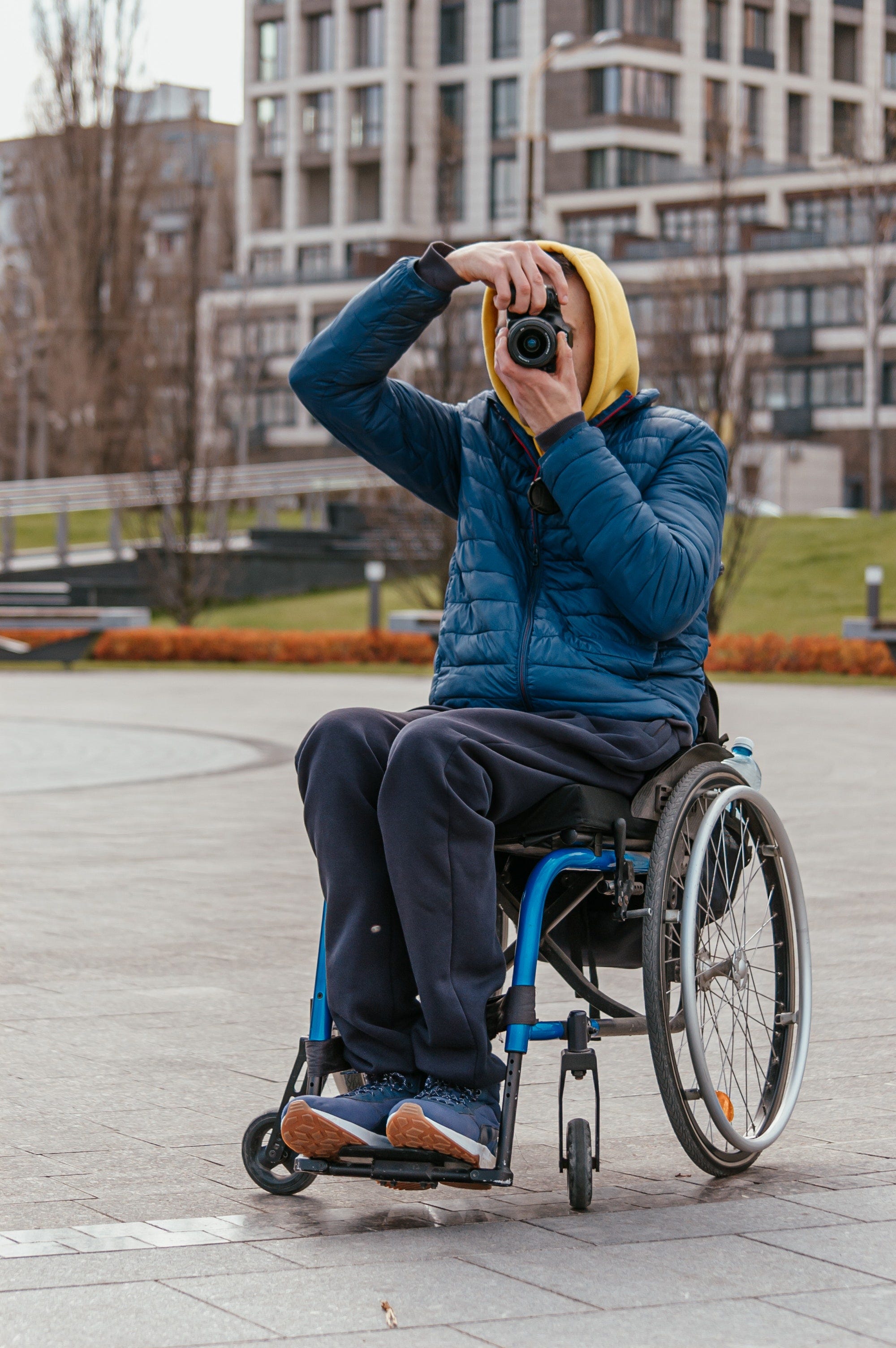
The person doesn't fit in the wheelchair. Most of the time, the wheelchairs are too big, and the armrests are nearly under the armpits of the fake wheelchair user. And often, the knees are much higher than the seat.
The models sit very stiffly. As if they don't belong in this wheelchair because they don't.
Look for other photos in the series. You will see that sometimes 10 or 20 different people sit in the same wheelchair. That's a red flag.
Look for other photos by the same photographer. They often use the same model in different roles. That is a good way to spot fakes for other disabilities as well. I just found a "blind" man who was a painter in another photo and a "wheelchair user" who was a roofer in another one.
What can you do to avoid fake photos and bad illustrations?
Use trusted sources.
Hire disabled photographers and illustrators. And if you work with others, make it clear that you don't appreciate stereotypes. Challenge them to check if they really know what modern wheelchairs look like and to avoid using stereotypical stock photos as a reference.
Hire disabled models. Avoid stereotypes, let wheelchair users push themselves (because that's what many of us do), and show powerchair and mobility scooter users and other people with different impairments.
Speak up in your circles when you spot your company using fake photos. Encourage others to use trustworthy sources and to have an eye for inauthentic imagery.
Which are good sources?
Disabled and Here Collection - A disability-led effort to provide free and inclusive stock images.
PhotoAbility - PhotoAbility wants to increase the usage of imagery of disabled people in tourism, leisure, and lifestyle mediums by providing high-quality stock photos.
Age-positive image library - The first free library showing positive and realistic images of over-50s in a bid to challenge negative and stereotypical views of older age.
Pexels - Pexels provides high-quality and completely free stock photos; it is the database I use most often because of its high number of authentic photos of disabled people.
Some interesting links
Blind friends kicked off P&O cruise say they were treated ‘like criminals’ - Jennie Bailie and Pam May described the experience as ‘humiliating’
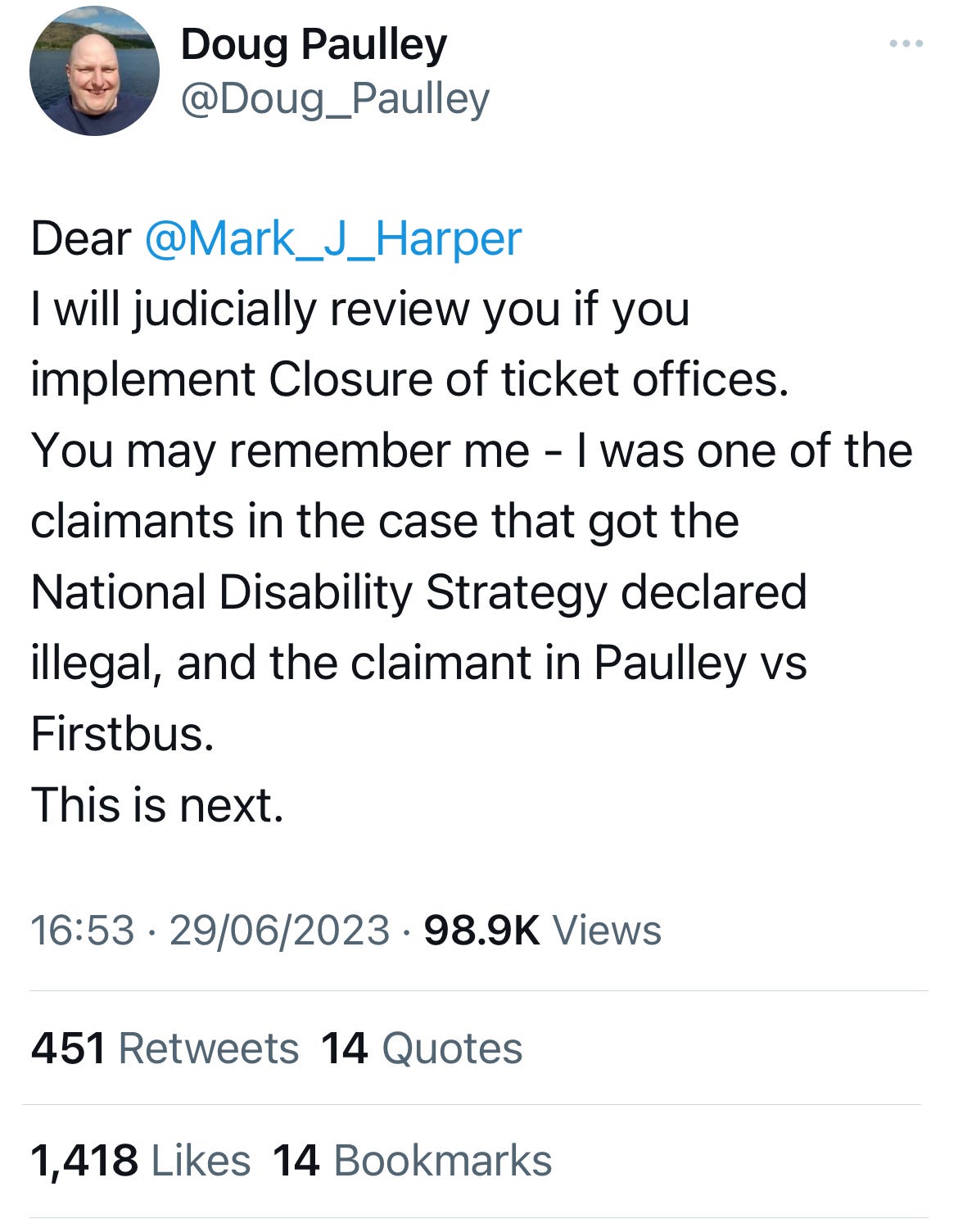
Plans to close most UK railway ticket offices to kick off ‘in weeks’ - A big concern for disabled people could become a reality soon (but Doug Paulley is ready to intervene, see below).
Campaigners pledge to fight to ensure ministers stick to new air travel promises - Campaigners have warned ministers that they will fight to ensure the government keeps its promise to introduce laws aimed at improving the protection offered to disabled air passengers.
Something #DisabilityTwitter is talking about
After the landmark Supreme Court decision in Paulley vs FirstGroup about wheelchair spaces on buses and the challenge of new inaccessible footbridges, Doug Paulley could stop the ticket office closures next. His tweet has 100,000 views…
Something to read
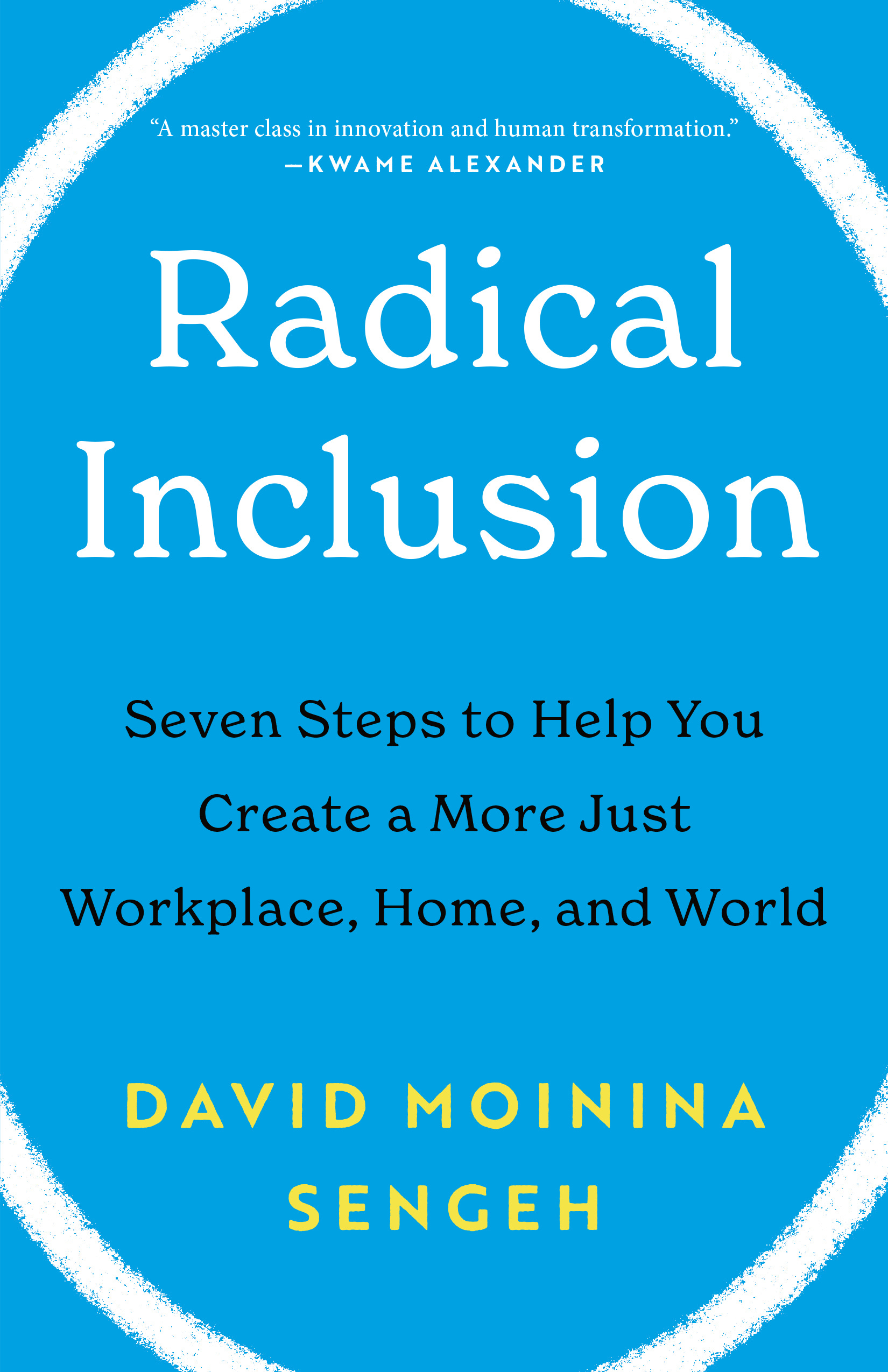
I finished "Radical Inclusion" by David Moinina Sengeh this week. It's a truly inspiring book by the education minister of Sierra Leone. He fought for the right to education for pregnant teenagers in his country and explains how to implement inclusion even in difficult circumstances. It’s also available as an audiobook.
Some final words
You cannot escape the responsibility of tomorrow by evading it today.
(Pascual Berrone)
The Accessible Link is a reader-supported publication. If you know someone who would like to read this newsletter, give them a gift subscription.
Who is writing this newsletter?
I’m Christiane Link, and I improve the customer experience in aviation, transport, and travel. I worked as a journalist for over two decades and travelled extensively for business and leisure. I’m a wheelchair user. If you want to read more from me, follow me on LinkedIn, Twitter, Bluesky or Mastodon. You can also reply to this email if you want to contact me.