
The 90s are back - The Accessible Link
Why disability simulations are harmful

Hello everyone,
"The 90s are back" was my thought more than once when I scrolled through my LinkedIn timeline in the past few weeks. I see photos of non-disabled people in unsuitable wheelchairs, with noise-cancelling headphones and sleep masks, attending some old-fashioned "disability awareness training", and navigating their offices. They get told they will experience what it is like to be a wheelchair user, blind or deaf.
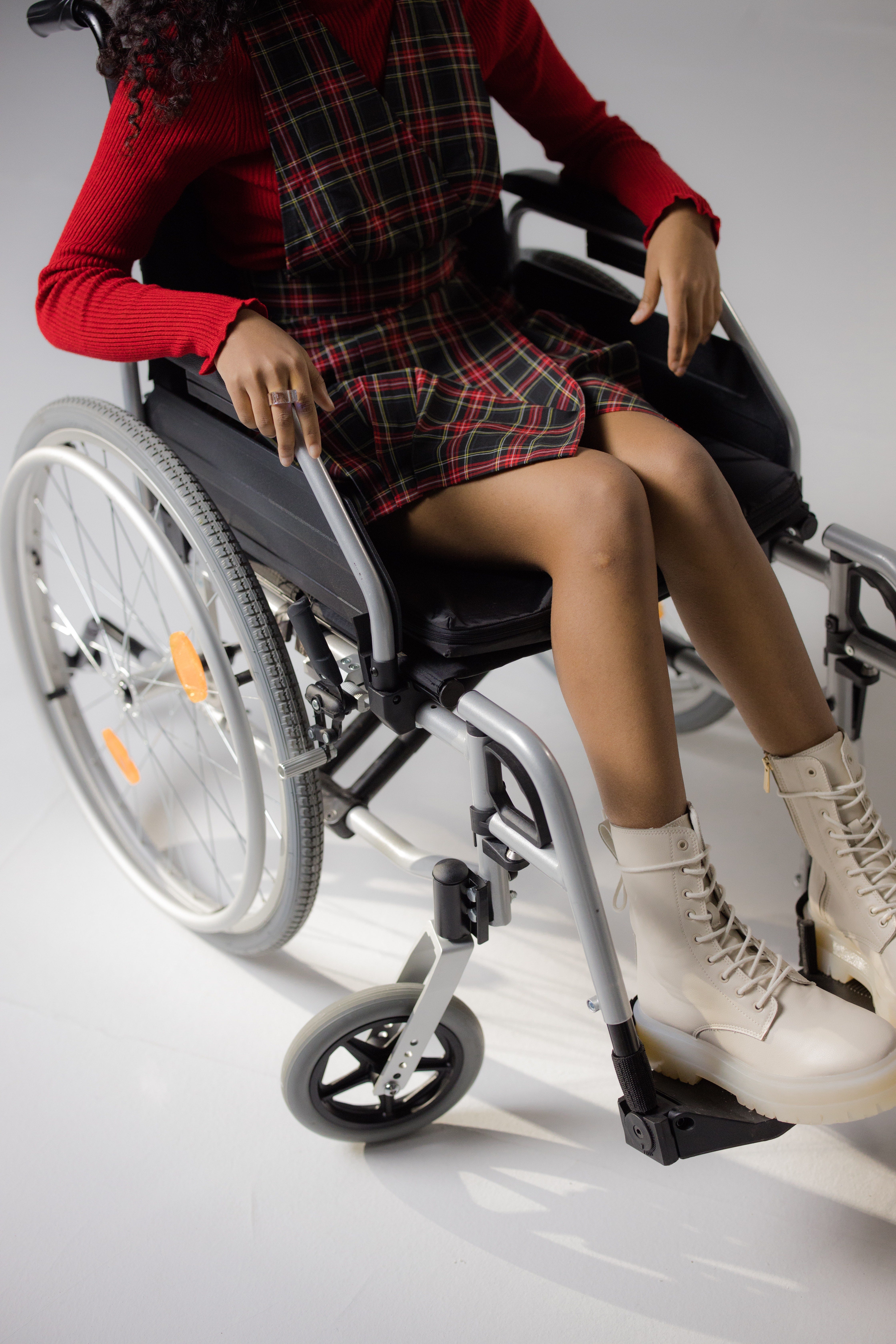
Certainly done with good intentions to raise awareness and understanding, research has shown that these simulations are ineffective and harmful, especially for people in roles where interaction with disabled people is important.
A study published in the quarterly peer-reviewed journal "Rehabilitation Psychology" in 2017 investigated the impact of disability simulations on mood, self-ascribed disability stereotypes, attitudes about interacting with disabled individuals, and behavioural intentions. The study evaluated disability-awareness simulations by randomly assigning undergraduates to stations simulating different impairments.
More confused and scared
The results showed that disability simulations made participants feel more confused, embarrassed, helpless, and scared of becoming disabled compared to the group who didn't participate in the simulation. Following the simulations, empathy toward disabled people increased, but attitudes about interacting with disabled people did not improve. When confronted with statements like "I am grateful that I don't have such a burden" (of disability) and "I dread the thought that I could someday end up like them" (disabled people), they were more likely to agree.
Participants judged their disabled selves as less competent, expressed more pity and interaction discomfort, and were not more willing to interview disabled candidates following the simulations compared to those who did not play disabled. Additionally, frustration, guilt, anxiety, and depression were most pronounced among those who interacted with disabled people less than once per month. So people who had no contact with disabled people reacted even worse.
The study found that simulating disabilities promotes distress and fails to improve attitudes toward disabled people. The simulation even undermined inclusion efforts. Other studies had a very similar outcome.
There are only a few scenarios where I think simulating being disabled is acceptable, e.g. if staff learns practical, hands-on skills like lifting someone. Then it's clear that it is not a simulation of the experience of a disabled person, but a non-disabled person is used as a dummy.
So what's the solution?
Get disabled people involved. Hire disabled facilitators and consultants. Start an advisory group of disabled people and take them seriously. Listen. Listen. Listen. No sleep mask will tell you how good or bad the service at an airport or a station is when you're blind. You're just blindfolded and incompetent on top, while genuine blind people have years of experience.
The same is true for the wheelchair simulations. Using a wheelchair is a skill, and the wheelchairs used for these simulations are not the kind of wheelchairs genuine wheelchair users are using (hopefully). Imagine walking with stilts and telling the world afterwards how difficult walking in general is.
Let decision-makers and others observe how disabled people use the service and navigate through your premises. Talk to them while doing so. Transport for London runs a very successful programme where managers travel with a disabled person low-key (without their uniform and lanyard) and shadow them. They can not only witness what barriers disabled customers have to face while using public transport, but they can also see how other staff members interact with the disabled person they're shadowing.
Focusing on providing a better service makes people more motivated to solve issues they have witnessed afterwards. They can later remember what they saw when they had to make decisions that could impact accessibility.
The triggering of pity during the simulations and, in general, in relation to disability is highly problematic. I have never received good service from anyone who pitied me. I don't think pity is the right approach for management decisions, either.
Some interesting links
Network Rail's inaccessible footbridge plans will get a public inquiry.
Disabled people face too many access problems across London, politicians have warned.
Air Canada has published a 3-year accessibility plan and a statement on how they want to improve the service for their disabled customers. This initiative comes after Air Canada got a lot of media attention for treating disabled customers badly.
In the Netherlands, micro-mobility includes cars for disabled people so small they can drive on bike lanes. But regulating them took some trial and error.
Something to read
The transport select committee has published the written evidence of their inquiry about accessible transport and aviation; it is really an interesting read. TLDR of most responses: We need change, and the regulators need enforcement powers and better resources.
Some final words
When leaders seek to avoid conflict by making decisions in private, it only exacerbates problems and often leads to much greater conflict and
inequity. Francoise Brougher (Former Pinterest COO)
The Accessible Link is a reader-supported publication. If you know someone who would like to read this newsletter too, give them a gift subscription.
Who is writing this newsletter?
I’m Christiane Link, and I improve the customer experience in aviation, transport, and travel. I worked as a journalist for over two decades and travelled extensively for business and leisure. I’m a wheelchair user. If you want to read more from me, follow me on LinkedIn or Twitter. You can also reply to this email if you want to contact me.