
The Cricklewood Saga
The Access for All programme is delayed.

You can listen to the newsletter here:
In August 2019, I travelled from the East Midlands to London St Pancras after a business meeting. I started at around 3pm and expected to arrive at St Pancras by 5.30pm. Spoiler: I never made it to St Pancras. However, my overall trip ended at 1:30am and by taxi, because my train got stranded at Cricklewood station. Cricklewood was not a regular stop for my train; it’s a small station in north London. We were lucky to get stranded at a station where people could easily leave, not in the middle of nowhere.
There was a power cut across the south of England, and the electric Thameslink train in front of us couldn’t move. Our diesel-powered train couldn’t move because the track was blocked by the Thameslink train.
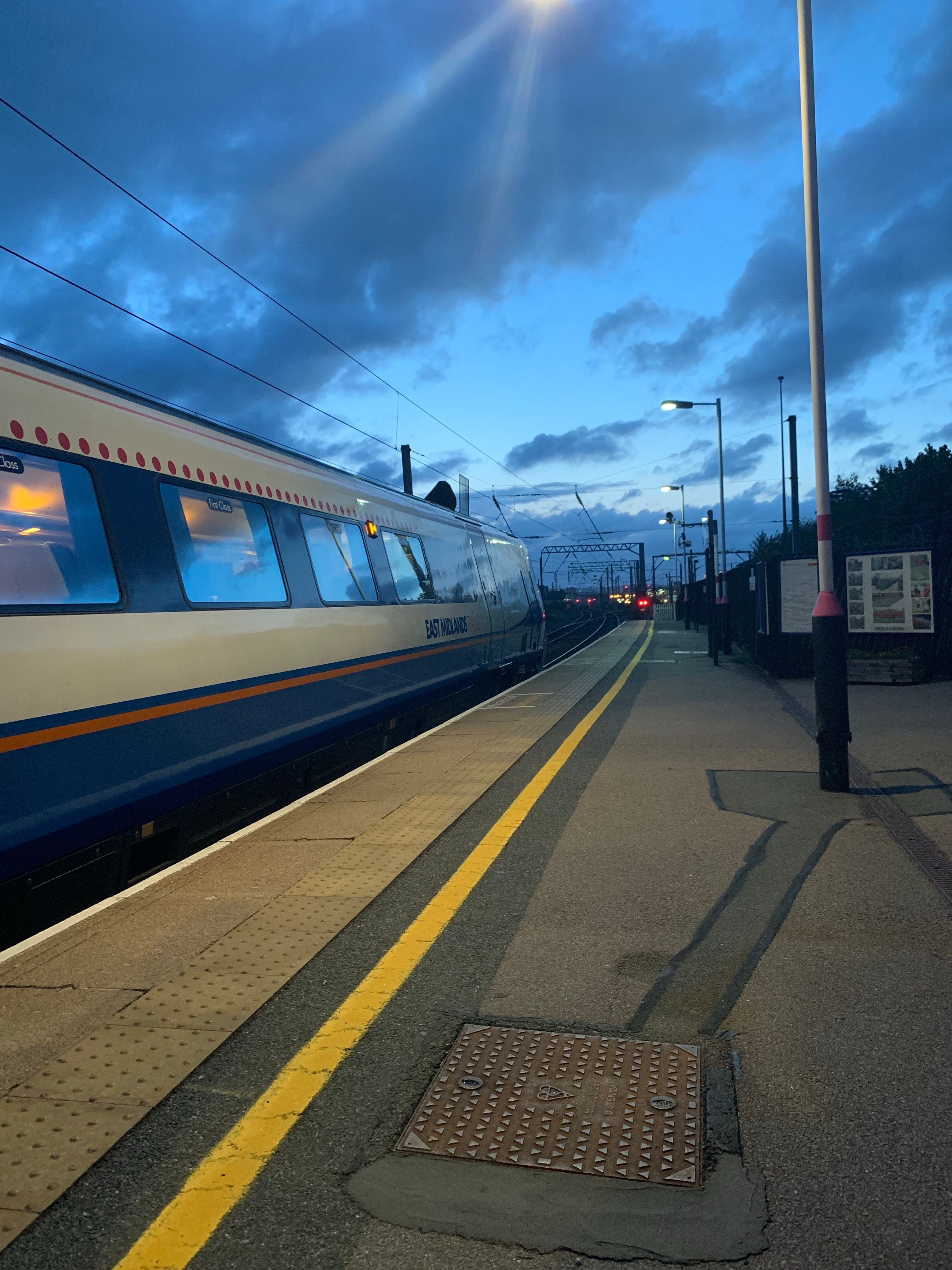
About two hours later, our train was evacuated. Everyone left the train - except the train crew and me. Cricklewood has no lifts. The team lead explained to me that Cricklewood station wasn’t accessible and that the toilet next to me on the train was broken on top. They wanted to move me to another part of the train with a working accessible toilet. Nobody knew what was going on. They had no contact with their control room.
I agreed to move, so they put out a ramp at the door for me to get onto the platform, as my wheelchair wouldn’t fit in the aisle to move through the train. I noticed the steep staircase at Cricklewood station. They then put another ramp down for me to get into First class, where the whole team had gathered and where the working toilet was.
The team wanted me with them so they could help me easily. They were incredibly kind and empathetic, making this the best customer experience I’ve ever had when travelling by train. One team member couldn’t pick up her child from nursery due to the delay, but still, everyone remained positive. Teams are only as good as they are in crisis, and they were brilliant.
They offered me drinks and food from the train for free and even asked if they should go to McDonald’s or the supermarket nearby if I wanted anything else. So kind!
They offered to call the fire brigade or ambulance to get me out, but I didn’t want to call emergency services because it would add to the chaos in England. I was in no emergency. I was fine with food, drinks, and a working toilet thanks to the team.
Despite waiting for hours, they kept checking on me. After about five hours, they discussed how to move our train onto the other platform. The other platform for the other track had step-free access, and there were points between our train and the stranded Thameslink train. They basically had to change the points and drive onto the opposite track. And they did it! They just did it; someone made a bold decision and solved the problem. And after hours and hours before midnight, I could leave the train and the station.
6 months later, I started working for the railway industry. I got a memo on my desk saying that Cricklewood station would receive Access for All funding from the Department for Transport. I laughed out loud when I saw it, but it’s great, good news. Nobody else will get stranded in Cricklewood again due to the lack of lifts, I thought.
Fast forward 6 years, new government, new rail minister. I read the Department for Transport’s press release. The funding for Cricklewood is “indefinitely deferred”. Reason: “As the benefits such upgrades would deliver to users of the station would not justify the significant disruption caused to other users of the Midland Main Line and the significant costs to passengers and taxpayers.” Is this the inclusive culture of the new “Great British Railway”?
It gets so normalised currently, to tell disabled people they are 2nd class customers, electorate, taxpayers and citizens. No social model of disability anywhere. That’s not good if your aim is growth and innovation.
And Cricklewood is not the only station that lost its funding. Of 50 planned stations, only 23 will progress.
Looking back, my long evening, my Cricklewood saga has become more than just a travel mishap; it’s a small case study in what our railways and politics get right and wrong.
On that powerless August evening, a train crew with no information, no working phones and no accessible station still managed to create dignity, safety and a sense of calm. They improvised, they cared, and they took a bold decision so that I could finally get home. That’s what inclusion looks like in practice: people refusing to treat you as a problem to be managed.
Years later, reading that Cricklewood’s long-promised accessibility upgrades have been “indefinitely deferred”, the contrast couldn’t be sharper. On the ground, staff are bending over backwards to make an inaccessible system work for everyone. At the top, the system is still comfortable describing disabled passengers as a cost, an inconvenience, a disruption not worth taking.
If the real reason is (that’s just my guess) that the new Brent Cross West station down the line now offers step-free access, then say that honestly and respectfully. Explain the logic. Acknowledge the people who will still find Cricklewood unusable, and set out how you’ll serve them instead. And then deliver.
Accessibility decisions are complex; ableist messaging is not inevitable. It’s a choice.
Because this is the bigger point: the way we talk about accessibility tells disabled people where they stand in the hierarchy of value. When a government document implies that some citizens just aren’t worth the “significant costs”, it feeds a culture in which disabled people are routinely treated as second-class customers, voters and neighbours. That’s not just morally indefensible; it’s strategically foolish in an ageing society that claims to want growth, innovation and higher passenger numbers. And it signals to the ones who still see accessibility as an annoying add-on, ”don’t change. We don’t like it too.”
My Cricklewood saga showed me what’s possible when people act with empathy inside a flawed system. The challenge now is to build a railway, politics and policy that matches that standard by design, not by exception. Accessibility shouldn’t depend on which crew happens to be on shift when the power goes out. It should be built into every station, every plan and every press release, from the first draft to the final decision.
Christiane Link
Some interesting links
Bus Users UK has commended the announcement from the Government that £3 billion is being made available to boost bus services across the UK.
‘I’m not equal’: The ‘demeaning’ access issues faced by disabled passengers - Very good ITV report and article.
Liverpool Street Station has some interesting new signage. The lift is very often broken, and replacement is overdue.
Something to read
The National Skills Academy for Rail (NSAR) has published its Rail Workforce Survey 2025, which is an annual comprehensive survey of rail industry professionals. Each year, railway organisations across the industry contribute by submitting their workforce data on demographics, job roles and work locations.

For the second time, they collected data on disability in the railway industry workforce. The sample size was limited, with data received on 29.4% of the workforce. Of these people, 4.5% were disabled. Government data from 2022/23 suggested that 24% of the UK’s population is disabled.
4% is so low that I don’t buy the NSAR’s explanation, “One likely explanation is that employees self-report to their employers whether they are disabled, and either would not consider themselves as disabled or even perhaps aren’t aware of being classified in such a way.” If you don’t know who your disabled people are and if they are scared to come forward, there is a major underlying issue to start with. And where are the people who can’t hide that they are disabled? Where are they?
Something to watch
Did you know that Greece has the most lifts per head in Europe? And that the US and Canada have a lift problem? Really good short film about the lift industry worldwide.
Some final words
The Accessible Link is a reader-supported publication.
Who is writing this newsletter?
I’m Christiane Link, and I improve the customer experience in aviation, transport, and travel. I worked as a journalist for over two decades and travelled extensively for business and leisure. I’m a wheelchair user.
Work with me
Whether you're a Customer Service Director, a Head of Customer Experience, a corporate Accessibility Manager, a DEI leader, a transport planner, or a member of a disabled employee resource group, I can help you make your organisation more inclusive. You can book me for speaking engagements or hire me as a consultant for your accessibility or DEI strategy, communications advice and other related matters. I have worked for airlines, airports, train operators, public transport providers, and companies in other sectors.
If you want to read more from me, follow me on LinkedIn, Twitter, Bluesky or Mastodon. You can also reply to this email if you want to contact me.
.