
The hidden labour when travelling
And what a difference staff can make.

You can listen to the newsletter here:
Hello everyone,
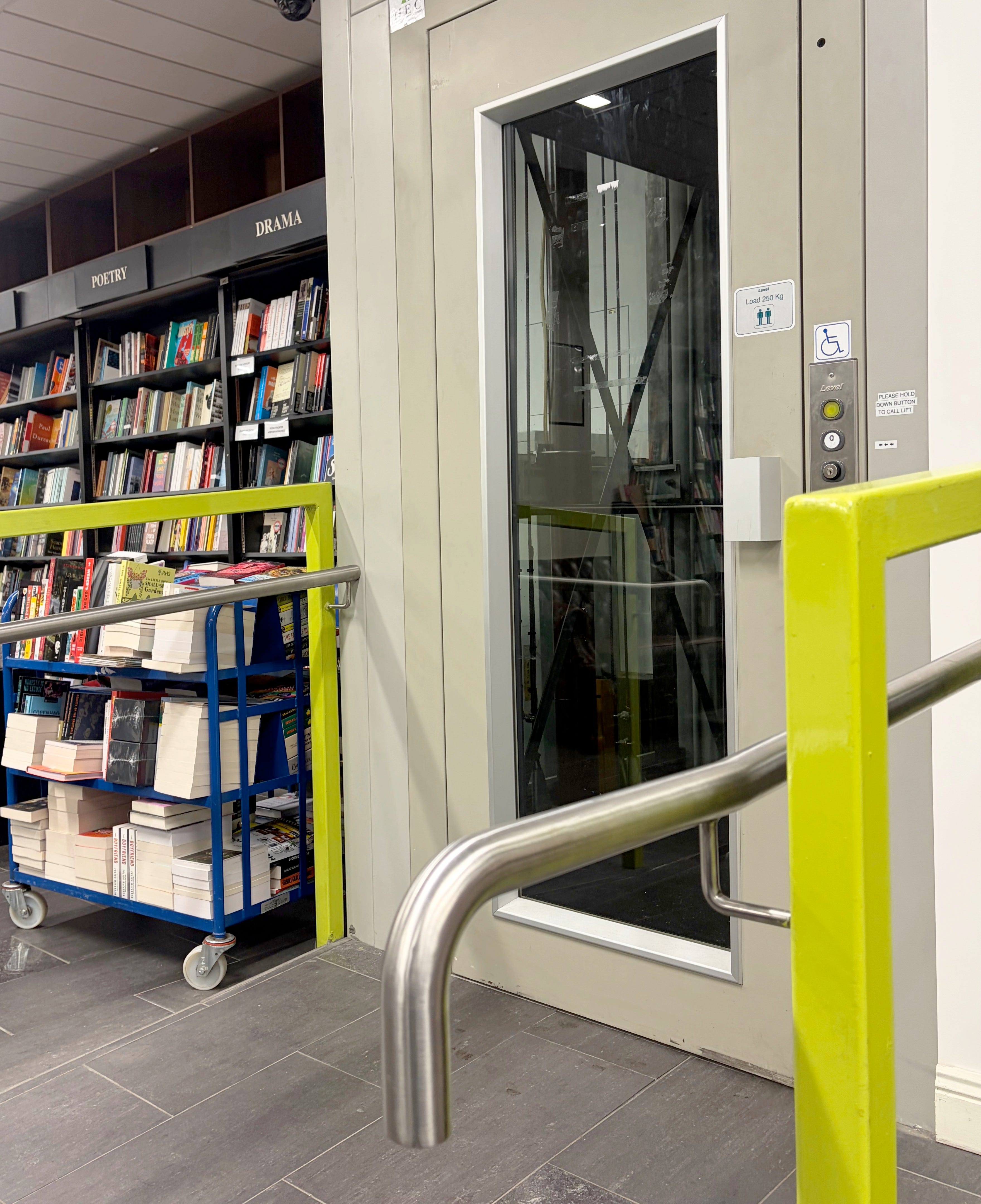
The past two weeks have been a contrast. I’ve seen what accessible travel looks like when it works: a lift squashed into a Dublin bookshop, a team of railway staff in Kettering managing a crisis with real humanity, and I’ve been reminded, again, of what it looks like when it doesn’t. Two weeks of hotels, conferences, airport tours, train disruptions, and one serious accident. A lot happened.
The Planning Nobody Sees
Let me say something I suspect most non-disabled professionals in this sector have never had to consider. Before I got on a plane to Dublin, I had already made a dozen decisions that most passengers don’t make at all.
Which hotel near Heathrow has a room I can actually use, not just one that calls itself “accessible”? How do I get to the hotel from the airport in Dublin if the airport express bus is a coach that requires pre-booking for wheelchair users, and I don’t know if my plane will be delayed? (Change that, Dublin; it’s not a good first impression.) Will the assistance be decent and on time, and what happens if they’re late? How do I get to the conference venue from my hotel in Dublin? Do I have to inform Irish Rail that I’m using their DART train? And how do I do that?
In the end, I stayed at the Holiday Inn Express Terminal 5 the night before my flight. It was the right call. The staff were warm, and the accessible room was exactly what I expected. That uniformity of hotel chains that some travellers find boring is genuinely useful when you’re disabled. Predictability is a form of accessibility. When you know what you’re getting, you conserve energy for the journey itself.
The research, the phone calls, the contingency planning all of that is invisible labour. Disabled people in the UK make on average 30% fewer trips than non-disabled people. That gap isn’t about desire or capability. It’s about the cost, before you’ve even left your front door, of making a journey work. The transport sector rarely accounts for this. And when things go wrong, that pre-spent energy is the first thing you feel running out.
Heathrow, it’s you, not me
I’ll be direct: I am seriously considering avoiding Heathrow for a while. I did it before for a couple of years, and I think it’s time again to separate us again.
I travel frequently. I understand airports are complex, high-pressure environments. But there is a pattern at Heathrow that I have seen too many times to excuse as a bad day in the past 20 years. The way assistance staff interact with disabled passengers is still not okay. I should not be boarding a flight before 10 am, already feeling aggravated when I arrive at my seat because of how I was treated.
I’m not alone in this experience. The Civil Aviation Authority has audited Heathrow’s accessibility repeatedly, most recently giving it a “needs improvement” rating. All I say is, I don’t want to get treated like that anymore. London has enough other airports I can use. It means even more planning, but okay.
The demand for assistance at UK airports is growing year on year. We have an ageing population that doesn’t sit at home anymore; they keep travelling. Hoorah! That means every process failure, every undertrained staff member, and every dismissive interaction scales accordingly. Heathrow has the resources and the profile to lead on this. What it currently delivers is far below what I expect, even from bigger airports, and what I am willing to accept.
I sometimes can’t tell if I’m more physically tired from travel or more tired from the constant negotiation. The effort of maintaining your dignity. Of explaining, for the nth time, what you need. Of choosing your battles wisely at 8 am at a departure gate. As I get older, my tolerance for that kind of exhaustion is shrinking.
What Good Looks Like - Even in a Crisis
I don’t want this newsletter to be purely a litany of failure, because it would give a false picture of what I actually experienced.
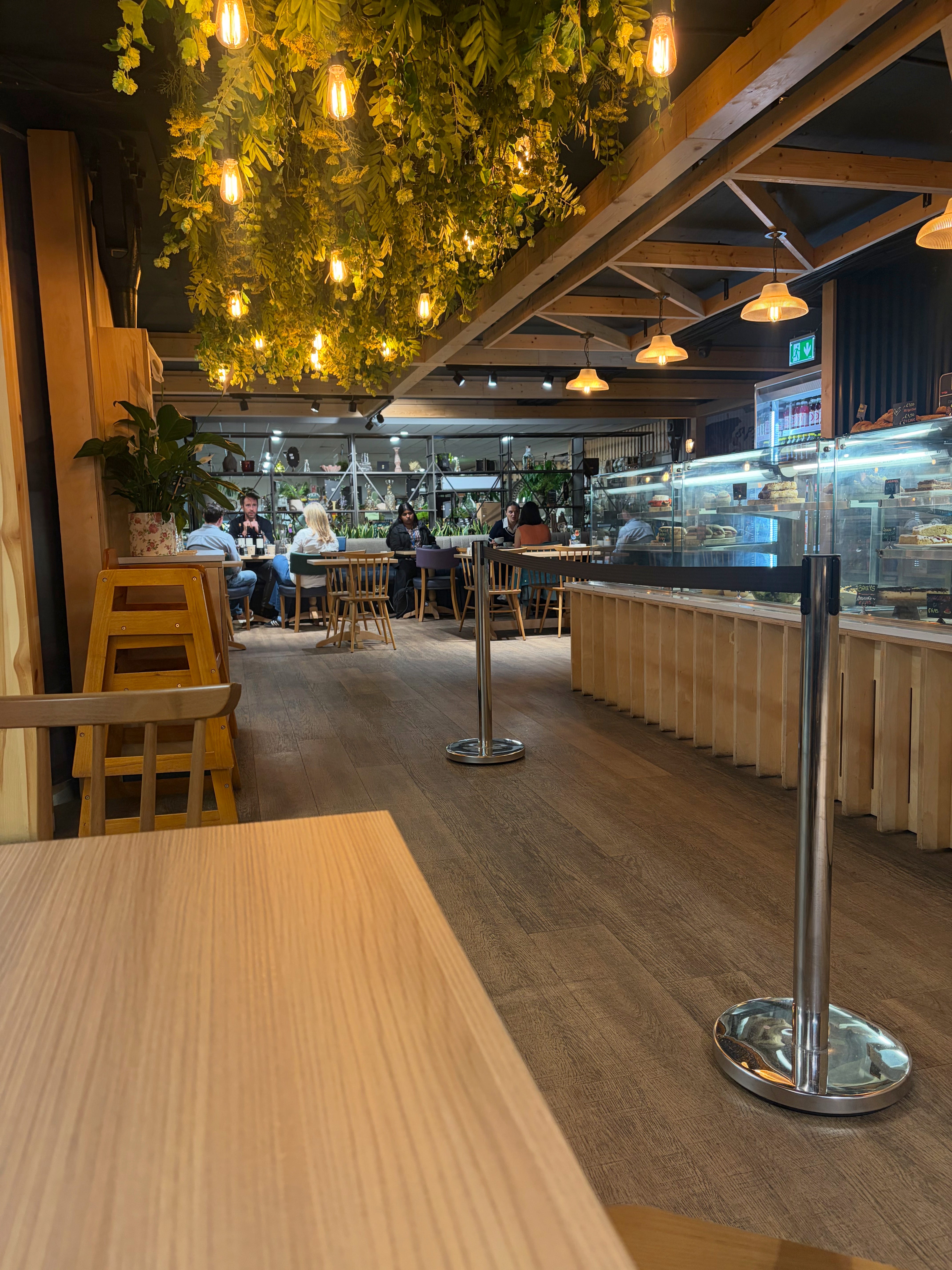
Dublin was genuinely good. Ten years since I’d last visited, and the city had made progress. The thing that stayed with me most wasn’t a major infrastructure project. It was a cosy coffee shop on the first floor of an old bookshop that had simply installed a lift. No dramatic renovation. No heritage excuse. Just a decision to make the space work for everyone. Someone, somewhere, decided that it mattered. And it did.
That same week, I had a conversation on social media about whether you can retrofit a lift somewhere with a modern floor. The bookshop in Dublin is a pretty straightforward answer to that question. You don’t always need to open up the floor. You just put the lift shaft on top of it. Will is often the limiting factor, not engineering.
Then there was the train
If you follow the news, you’ll know what happened last week on a Railway Main Line in Britain. Two passenger trains collided near Bedford. It was a major incident. I was on one of the trains behind the accident, and what followed was a very long, very hot day of delays, diversions, and uncertainty.
I want to tell you about what I witnessed at Kettering, because I think it matters. The staff there managed around 200 displaced passengers with remarkable competence and care. They gave out water. It was a very hot day. They communicated clearly. They found solutions. I had an accessible taxi after an hour or so. They provided a wheelchair for an older woman who could no longer stand. And when I finally made it to London Bridge at 10 pm, Southeastern assisted me without fuss, without drama. Someone travelled to my local station with me. I also got assistance at Northampton after travelling there by taxi.
I stayed calm, largely because the people around me did their jobs both effectively and with genuine empathy. There was also a railway enthusiast on our train at Kettering who stepped up and clearly explained they should try to get a taxi and who to contact afterwards. Brilliant man!
It is so important to plan systems from a customer’s perspective, especially for disabled people.
First, take the planning burden seriously. When you design assistance processes, customer communications, or journey planning tools, ask yourself: how many steps does a disabled passenger have to complete before they’ve even arrived? Every unnecessary step is a cost cognitive, logistical, and energetic that you are offloading onto your customers.
Second, staff culture is not a soft issue. The difference between my experience at Heathrow and East Midlands Railway in Kettering was not just about systems or infrastructure, but about clear, respectful communication and treatment from staff. If staff are consistently reminded that this matters, passengers’ experiences will reflect that.
Third, retrofit is possible. The Dublin bookshop lift shows accessibility doesn’t require rebuilding from scratch. It requires someone deciding it matters. Stop letting “it’s a historic building” be the end of the conversation.
And finally, disabled people put in a lot of work to be your customers. The planning, research, and proactive problem-solving are invisible to you but real to us. The least you can do is make sure that when we finally arrive, we’re treated well.
Some interesting links
The Rail Accident Investigation Branch has released its report into a dangerous occurrence involving a portable train ramp at Norwood Junction station on an Overground train. The train left with the ramp in the door because the wrong ramp was used; therefore, the doors could close with the ramp. Also, the driver was distracted. The correct portable access ramp for Class 378 trains had been removed from the station, and a different ramp was used, according to the report. Station staff were unaware that the ramp provided at Norwood Junction station was of the incorrect type. I really hope this will trigger much better care for ramp safety. It is dangerous to use random ramps. For the disabled passengers and for all passengers and staff on the platform as well.
We really shouldn’t rely on disabled railway enthusiasts to report wrong ramp use. That’s not a safety concept. And don’t get me started about the fact that we even have different ramps for different trains. Standardisation improves safety too.
The government has been accused of an “outrageous” failure to listen to disabled campaigners and allies who have been calling for ministers to include far stronger measures on accessibility and disability rights in their railways bill.
Transport Focus has published its “Rail Customer Experience Survey (RCXS)”, a new, industry-wide survey of rail passengers’ journeys. The report covers the headline results from mid-October 2025 to the end of March 2026. Overall, 87 per cent of passengers were satisfied. CrossCountry is the worst-performing train operator in the survey, with 79 per cent of passengers satisfied. Hull Trains passengers were most satisfied with their journey.
The Council and European Parliament have reached an agreement to update EU air passenger rights, introducing stronger protections.
A key change is the obligation for airlines to cover the full cost of replacing or repairing lost or damaged mobility equipment, an area where compensation had previously been capped at around 3,000 Euro, often far below actual costs. Airlines will also be required to provide temporary replacement equipment at no charge when needed.
A series of safety improvements on London's buses has been announced by Transport for London (TfL) as part of a plan to ensure that no one is killed on, or by a bus, by 2030. TfL said there would also be accessibility improvements including better communication between wheelchair users and drivers, and enhanced audio for ramp deployment.
Something to watch
That’s really cool: British supermarket Tesco is targeting disabled food shoppers and has released a collection of accessible recipes plus a great advert for it.
Something to listen to
If you read my end of May newsletter, you know that Germany isn’t perfect when it comes to discrimination, inclusion and accessibility. The BBC and journalist Amy Zayed, a blind journalist from Germany, ask what can be done to make Germany more inclusive.
Bits, Bobs & Jobs
Network Rail is searching for a Programme Manager [Accessibility] [Industry Partner DfTO]
Sony Interactive Entertainment is searching for a Senior/Staff Program Manager, Diversity & Belonging (L&D/D&B)
I just finished the book “London Falling: A Mysterious Death in a Gilded City and a Family’s Search for Truth” by Patrick Radden Keefe - My rating: 5/5 - What a page-turner. It was recommended on “The Rest Is Politics” podcast, and I understand why. A family searches for the truth after their teenage son dies.
In the future, I will send this newsletter to you on Wednesdays because my weekly schedule has changed.
Some final words

The Accessible Link is a reader-supported publication.
Who is writing this newsletter?
I’m Christiane Link, and I improve the customer experience in aviation, transport, and travel. I worked as a journalist for over two decades and travelled extensively for business and leisure. I’m a wheelchair user.
Work with me
Whether you're a Customer Service Director, a Head of Customer Experience, a corporate Accessibility Manager, a DEI leader, a transport planner, or a member of a disabled employee resource group, I can help you make your organisation more inclusive. You can book me for speaking engagements or hire me as a consultant for your accessibility or DEI strategy, communications advice and other related matters. I have worked for airlines, airports, train operators, public transport providers, and companies in other sectors.
If you want to read more from me, follow me on LinkedIn, Twitter, Bluesky or Mastodon. You can also reply to this email if you want to contact me.
.
I’ve found Dublin is doing a pretty good job of trying to retrofit. Glad that’s continuing!